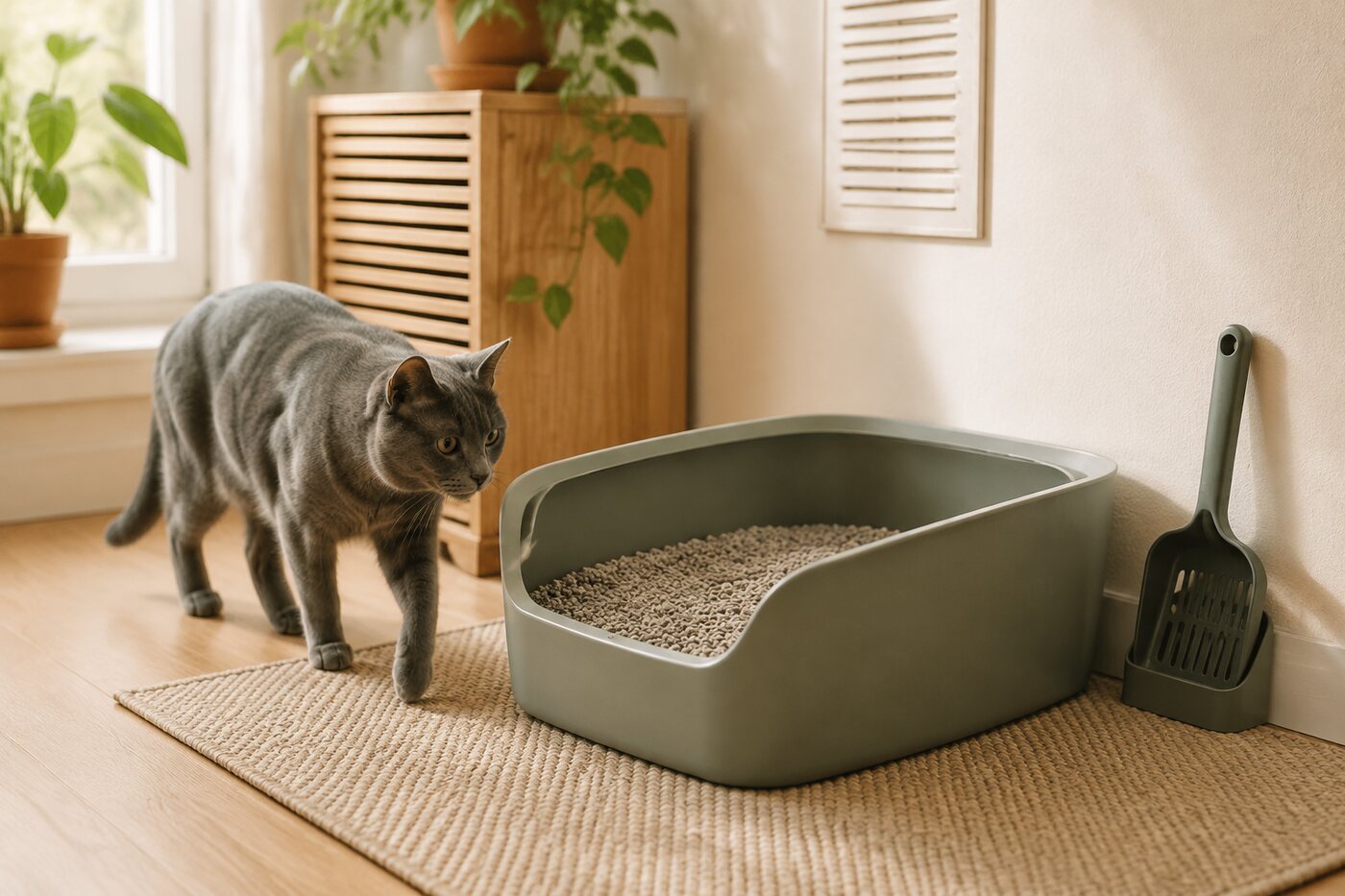
A useful starting point
A commonly recommended starting point is one litter box per cat, plus one extra. That means two boxes for one cat, three for two cats and four for three cats. The number is a starting point, not the whole setup.
Placement matters as much as number
- Spread boxes across separate, quiet locations.
- Make sure a cat has more than one route to a resource where possible.
- Keep boxes accessible for kittens, seniors and cats with mobility limitations.
- Scoop regularly and notice which locations your cats actually prefer.
If accidents continue
Do not simply keep adding trays. Review box size, litter, cleanliness, location and social conflict, and speak with a veterinarian about a new or persistent toileting change.
Test the layout, not just the count
A short exercise you can use at home. These are observations and low-risk changes, not a diagnosis or an individual treatment plan.
Example: two cats in one home
Three trays are a common starting point, but three trays squeezed into one cupboard can function like a single guarded resource. Instead, spread trays into separate quiet locations with access routes that one cat cannot easily block.
Think through the cat’s journey
For a cat with reduced mobility, check whether every tray requires stairs or a high step. A kitten may need a nearby option while learning the home. Keep food and water away from toileting areas and scoop trays routinely.
Make the next change measurable
If accidents occur, add or move one tray, note the date, and observe where the cat chooses to go. Sudden straining, pain, blood or attempts with little or no urine need urgent veterinary advice.
Contact a veterinarian promptly for sudden, severe, persistent or worsening changes. Breathing difficulty, collapse, repeated straining to urinate, seizures or suspected poisoning can be emergencies. Online guidance cannot diagnose your cat.
Further reading
This page uses Feline Veterinary Medical Association as a reference starting point. External organisations do not endorse this site.