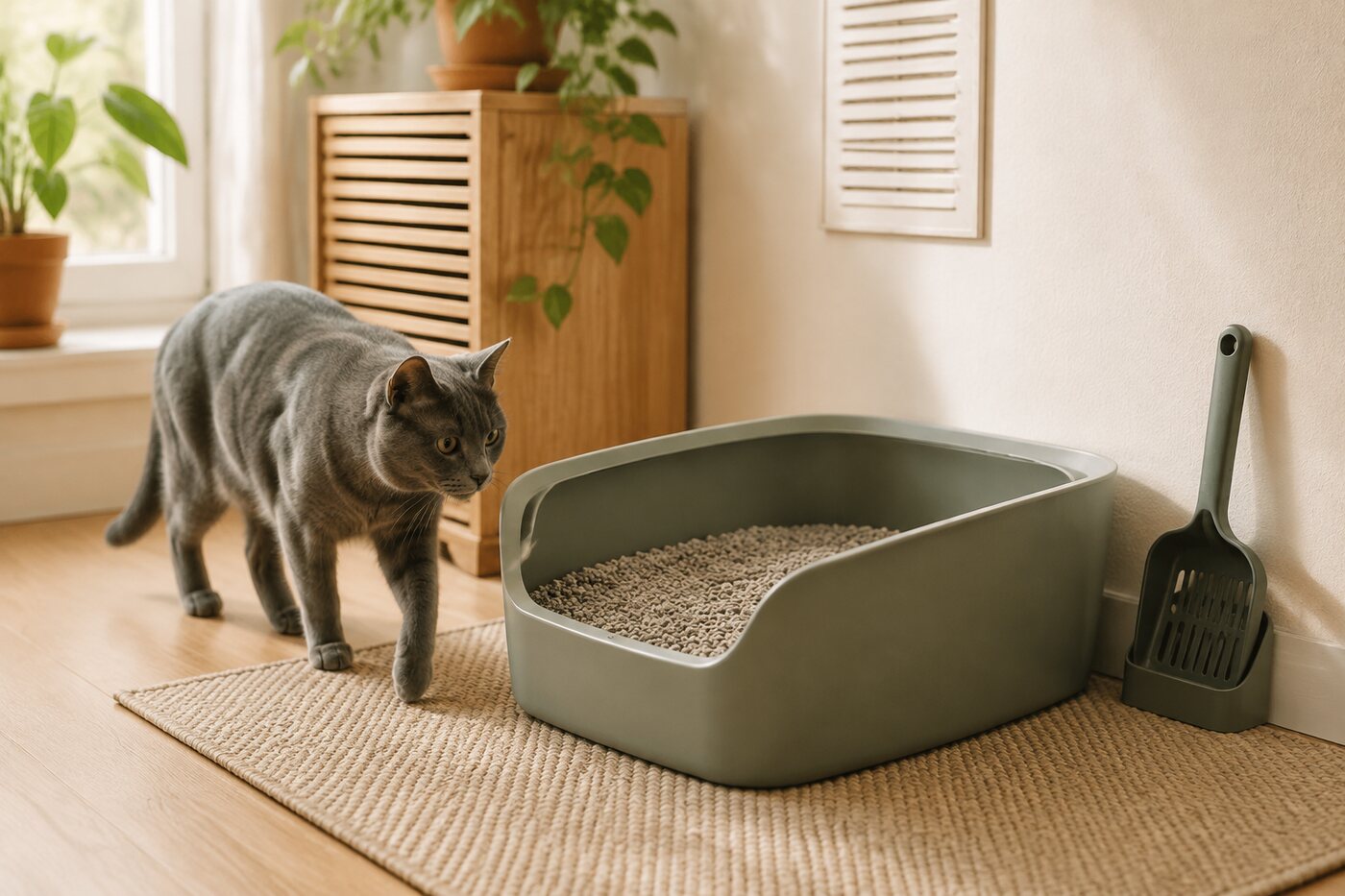
Start with the individual cat
Cats need clean, accessible toileting places that feel safe. Boxes lined together count as one location from the cat’s perspective and may not reduce competition.
This guide is general education. Age, medical history, previous experience, mobility and the home environment can change what is appropriate. Sudden appetite loss, breathing difficulty, collapse, repeated straining or suspected poisoning needs prompt veterinary attention.
A practical plan
- Use one box per cat plus one extra as a common starting point.
- Spread boxes across separate quiet locations.
- Choose large boxes and low access when mobility requires it.
- Scoop at least daily and clean without strong lingering fragrance.
- Treat straining or repeated unproductive visits as urgent.
What to check before buying
- A box with generous usable internal space.
- Low-entry access for kittens or cats with mobility difficulty.
- A practical scoop, mat and cleaning routine.
Common mistakes to avoid
- Placing every box together.
- Using fragrance to hide inadequate cleaning.
- Punishing house-soiling instead of checking health and setup.
Contact a veterinarian for sudden, severe, persistent or worsening physical or behavioural changes. Never delay urgent care while trying a product or online suggestion.
Shop litter-box supplies
Compare dimensions, materials, ingredients and suitability. This is a category search, not a guarantee that every listed product is appropriate.
Shop litter-box supplies on Amazon US ↗As an Amazon Associate I earn from qualifying purchases at no additional cost to you.
Source and review note
This page was reviewed against an established primary reference: view the source. It does not imply endorsement.