Treat a new change as information
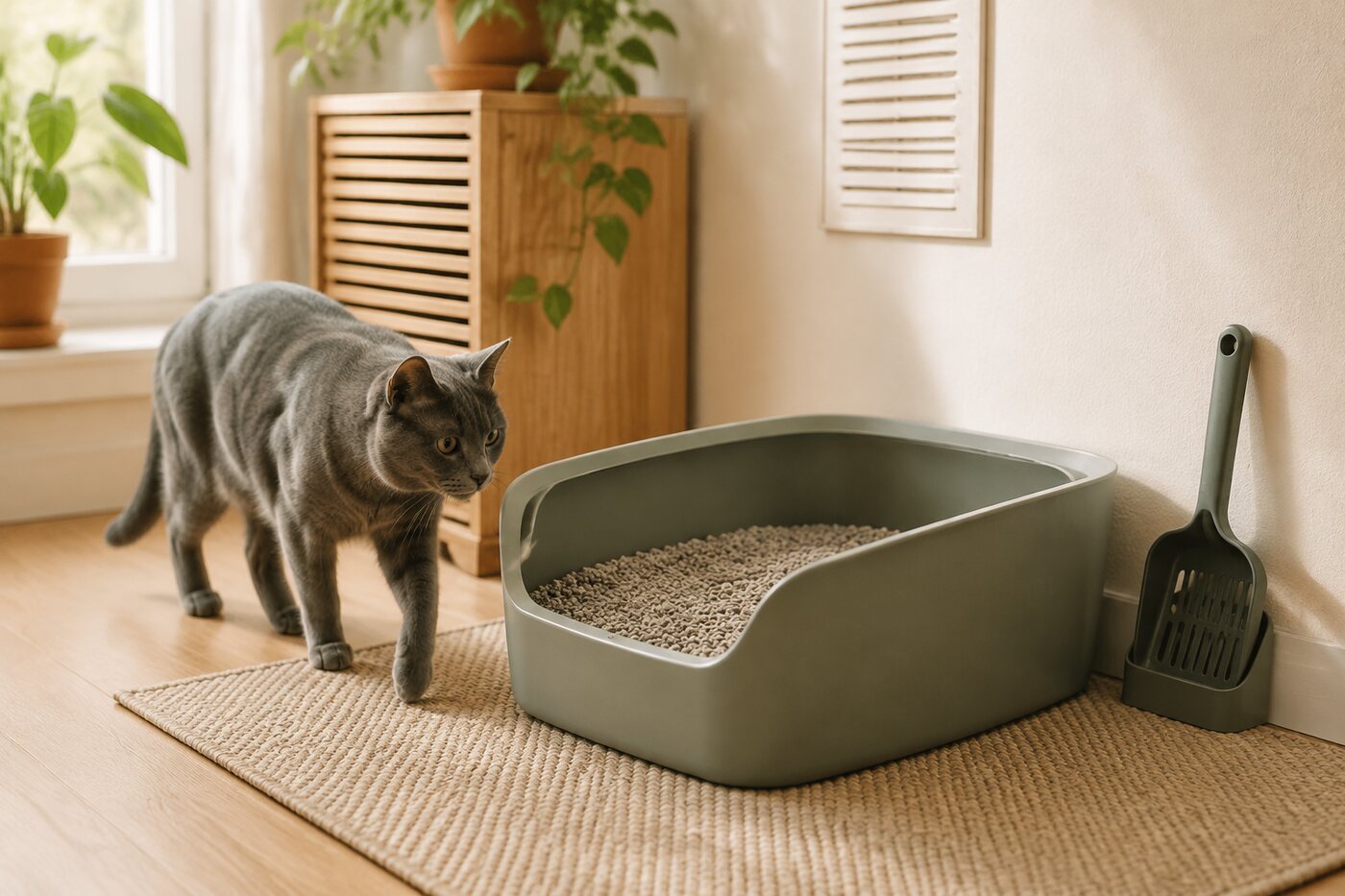
House-soiling is not spite. A cat may avoid a tray because of pain or illness, litter or box preferences, location, cleanliness, fear or conflict with another cat. A sudden change deserves attention rather than punishment.
Check the setup
- Scoop at least daily and keep trays easy to reach.
- Use separate quiet locations rather than lining every tray together.
- Offer a roomy box and avoid abrupt litter changes.
- In multi-cat homes, make sure one cat cannot guard the route to every tray.
Urinary straining is different
Repeated trips to the box, straining, crying, producing little or no urine, or obvious distress needs urgent veterinary assessment. Do not assume it is simply a behaviour problem.
Find out what the accident is telling you
A short exercise you can use at home. These are observations and low-risk changes, not a diagnosis or an individual treatment plan.
Map the place and pattern
Note whether the cat squats and leaves a puddle on a horizontal surface or sprays a small amount against an upright surface. These observations may help a vet or behaviour professional, but neither pattern proves a behavioural cause.
Make every box easy to choose
Use roomy, clean trays in quiet areas with escape routes. Avoid placing all trays side by side, beside washing machines or where another animal can trap the cat. Try changes one at a time and keep the previous preferred litter available where possible.
Treat urinary straining as urgent
A cat repeatedly visiting the tray, crying, passing drops or producing no urine may have a life-threatening blockage, particularly in males. Seek emergency veterinary care rather than monitoring at home.
Contact a veterinarian promptly for sudden, severe, persistent or worsening changes. Breathing difficulty, collapse, repeated straining to urinate, seizures or suspected poisoning can be emergencies. Online guidance cannot diagnose your cat.
Further reading
This page uses Feline Veterinary Medical Association as a reference starting point. External organisations do not endorse this site.