Start with the individual cat
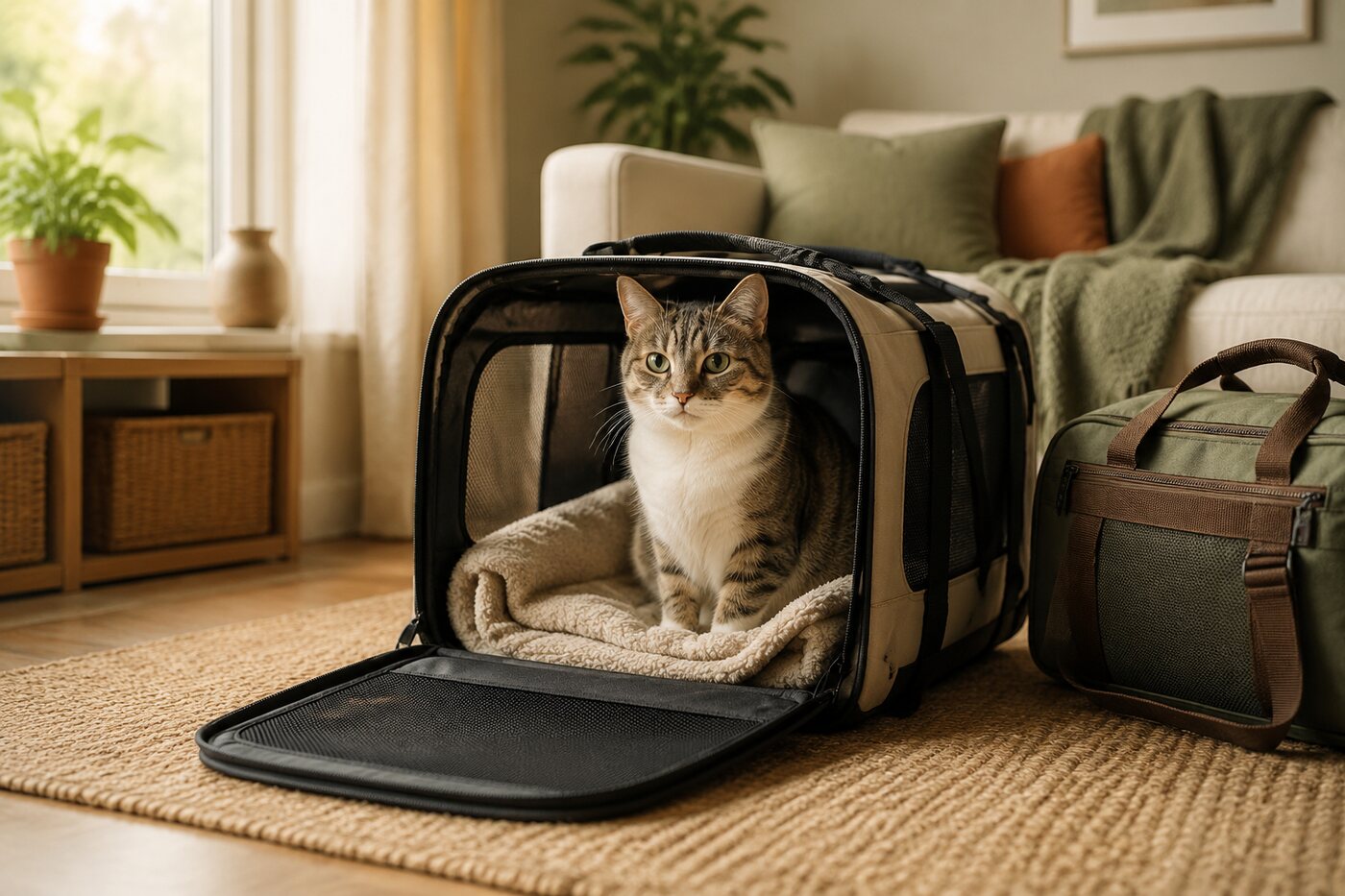
The carrier should become familiar furniture rather than appearing only before stressful journeys. Security, access and cleaning matter more than decorative styling.
This guide is general education. Age, medical history, previous experience, mobility and the home environment can change what is appropriate. Sudden appetite loss, breathing difficulty, collapse, repeated straining or suspected poisoning needs prompt veterinary attention.
A practical plan
- Choose enough room for the cat to stand, turn and rest.
- Check fastenings, ventilation and structural stability.
- A removable top can support calmer veterinary handling.
- Leave the carrier open at home with familiar bedding.
- Practice short calm sessions before necessary travel.
What to check before buying
- Secure doors and fastenings.
- Useful ventilation and a wipe-clean interior.
- Access that suits the cat and intended journey.
Common mistakes to avoid
- Allowing a cat to travel loose.
- Using a damaged or poorly secured carrier.
- Only bringing the carrier out during emergencies.
Contact a veterinarian for sudden, severe, persistent or worsening physical or behavioural changes. Never delay urgent care while trying a product or online suggestion.
Compare cat carriers
Compare dimensions, materials, ingredients and suitability. This is a category search, not a guarantee that every listed product is appropriate.
Compare cat carriers on Amazon US ↗As an Amazon Associate I earn from qualifying purchases at no additional cost to you.
Source and review note
This page was reviewed against an established primary reference: view the source. It does not imply endorsement.