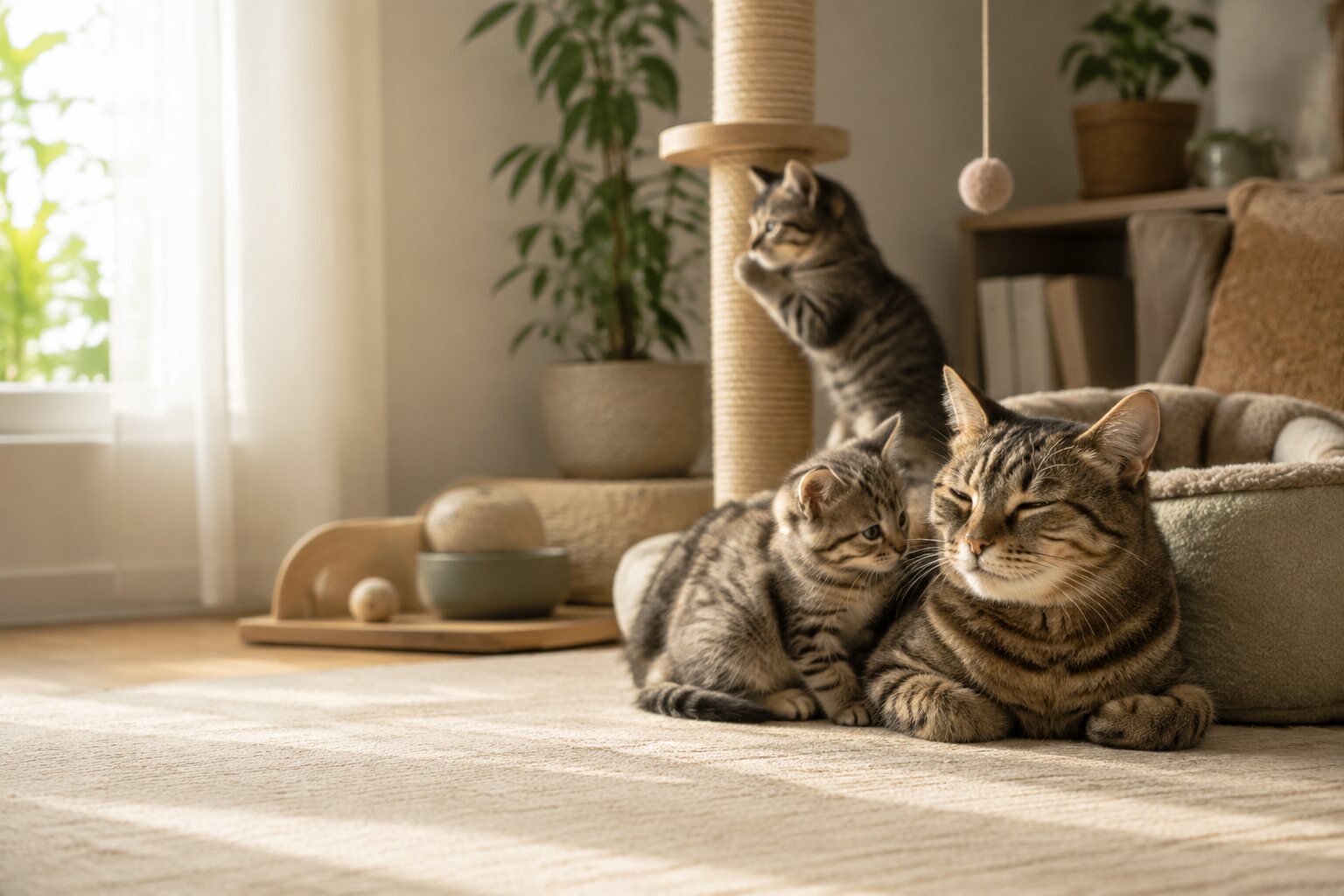
Start with the individual cat
Cat-proofing is prevention. Cats climb, squeeze, chew and investigate areas that can seem inaccessible, so secure storage and physical barriers matter more than verbal rules.
This guide is general education. Age, medical history, previous experience, mobility and the home environment can change what is appropriate. Sudden appetite loss, breathing difficulty, collapse, repeated straining or suspected poisoning needs prompt veterinary attention.
A practical plan
- Keep true lilies and daylilies out of cat homes and act urgently after suspected exposure.
- Store medicines, chemicals and dog parasite products securely.
- Secure windows, balconies and tipping furniture.
- Put away string, thread and small swallowable objects.
- Save veterinary and poison-control contact details before they are needed.
What to check before buying
- Secure screens, cord protection and closed storage.
- Stable barriers appropriate to the space.
- A practical carrier ready for urgent transport.
Common mistakes to avoid
- Waiting for symptoms after suspected lily exposure.
- Using a dog flea product on a cat.
- Assuming an indoor cat cannot reach a hazard.
Contact a veterinarian for sudden, severe, persistent or worsening physical or behavioural changes. Never delay urgent care while trying a product or online suggestion.
Shop home-safety supplies
Compare dimensions, materials, ingredients and suitability. This is a category search, not a guarantee that every listed product is appropriate.
Shop home-safety supplies on Amazon US ↗As an Amazon Associate I earn from qualifying purchases at no additional cost to you.
Source and review note
This page was reviewed against an established primary reference: view the source. It does not imply endorsement.