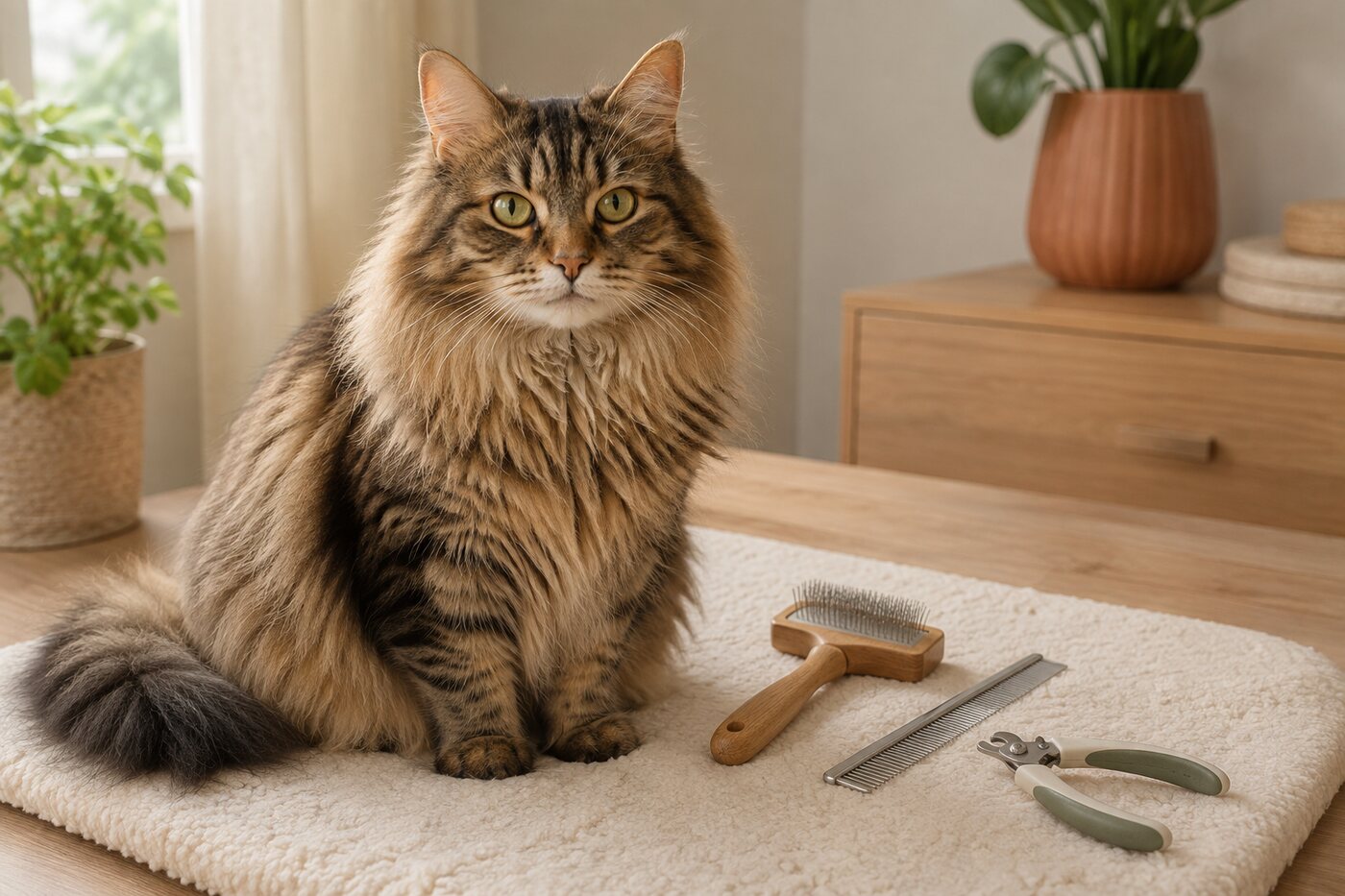
Start with the individual cat
Many cats manage much of their coat care, but coat type, age, mobility and health change what support is needed. Begin with seconds rather than a complete forced session.
This guide is general education. Age, medical history, previous experience, mobility and the home environment can change what is appropriate. Sudden appetite loss, breathing difficulty, collapse, repeated straining or suspected poisoning needs prompt veterinary attention.
A practical plan
- Pair brief touch and tool contact with something positive.
- Use tools appropriate to coat length and density.
- Stop before the cat becomes frustrated.
- Check claws and coat without pulling painful mats.
- Seek professional help for pain, skin changes or difficult mats.
What to check before buying
- A coat-appropriate brush or comb.
- Good lighting and stable positioning.
- Cat-safe claw-care tools used only with confidence.
Common mistakes to avoid
- Cutting close to skin under a mat.
- Using human creams or essential oils.
- Escalating restraint when the cat shows pain or panic.
Contact a veterinarian for sudden, severe, persistent or worsening physical or behavioural changes. Never delay urgent care while trying a product or online suggestion.
Shop grooming tools
Compare dimensions, materials, ingredients and suitability. This is a category search, not a guarantee that every listed product is appropriate.
Shop grooming tools on Amazon US ↗As an Amazon Associate I earn from qualifying purchases at no additional cost to you.
Source and review note
This page was reviewed against an established primary reference: view the source. It does not imply endorsement.